American Hairless Terrier
Breed standards
Origin
USA
Purpose
Watchdog
Official AKC standard
Approved: March 9, 2010
Effective: January 1, 2014
Overall appearance
Size, Proportion, Substance
Size: The ideal height at the withers is between 12 and 16 inches (30.5–40.5 cm).
Proportion: The body is rectangular, slightly longer than tall, with a ratio of 10:9, measured from the prosternum to the ischial tuberosity and from the withers to the ground.
Substance: Moderate bone, neither too heavy to appear coarse nor too light to appear fragile. The overall appearance should be strong but balanced, with firm, smooth, and flat muscles. Proper size is essential but should not outweigh breed type. Overly heavy or light bones and obesity should be penalized.
Head
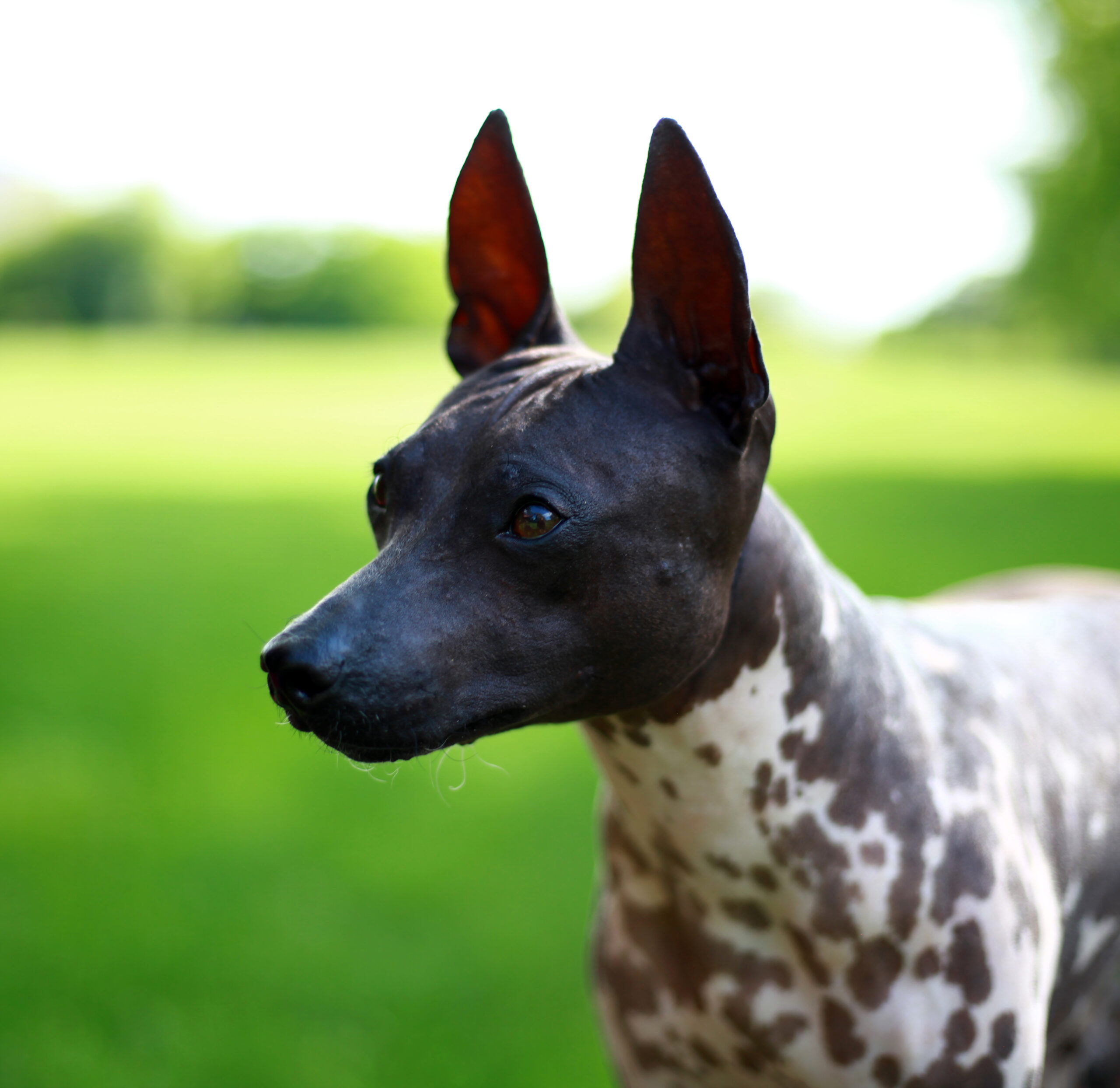
Expression: Alert, curious, and intelligent.
Shape: When viewed from the front or side, the head forms a blunt, wedge-shaped outline and is proportionate to the size of the body.
Skull: Broad, slightly rounded, tapering gently toward the muzzle. The skull and muzzle are of equal length with a moderate stop.
Muzzle: Well-filled under the eyes, tapering slightly from the stop to the nose, and well-sculpted. Jaws are strong, with well-muscled cheeks. Lips are tight, dry, and not pendulous. Lip pigmentation matches the nose color.
Nose: Solid-colored.
Faults: Steep stop, pointed muzzle, flesh-colored nose, or butterfly nose (dark with pink patches).
Serious Fault: Apple head.
Eyes: Slightly slanted, round, moderately prominent, medium-sized, and uniformly colored. Eye color ranges from darkest brown to amber and hazel, depending on the body color. Darker brown is preferred in brown eyes, while amber is acceptable in blue-coated dogs. Blue eyes are permissible only in blue or blue-fawn dogs, with gray being preferred. Eyelid pigmentation matches the nose. Partial eyelid pigmentation is allowed if the skin/fur around the eyes is white.
Bite: Teeth are white and well-developed, with a scissors bite. A level bite is acceptable. Missing premolars should not be penalized. Undershot or overshot bites should be penalized.
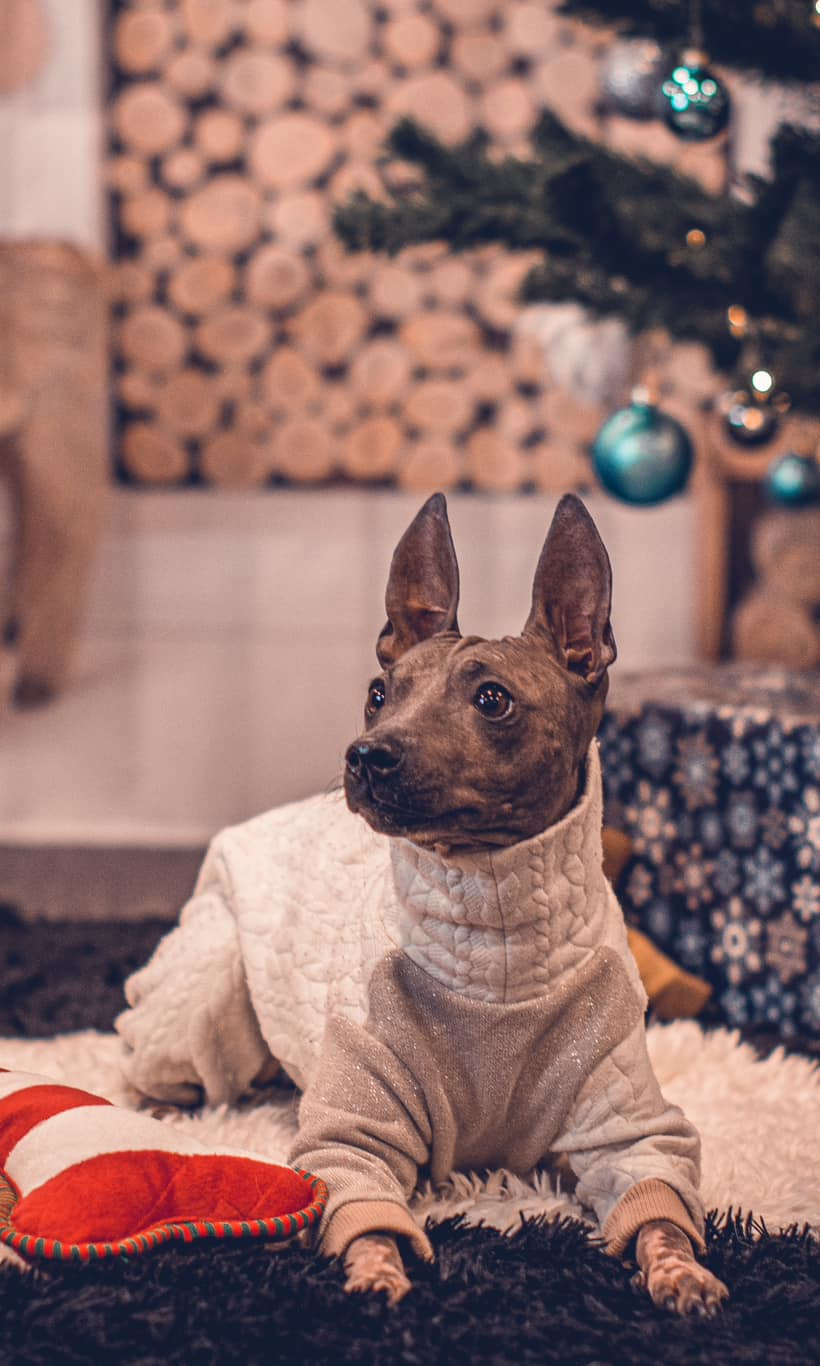
Ears: V-shaped, set on the outer edges of the skull. Erect ears are preferred, though tipped or button ears are acceptable. Both ears should be carried symmetrically.
Faults: Rose ears, flying ears, tulip-shaped ears, or asymmetrical ear carriage.
Disqualification: Dropped ears.
Neck, Body, Topline
Neck: Cleanly outlined, moderately long, muscular, slightly arched, tapering slightly from the shoulders to the head, and blending smoothly into well-laid-back shoulders.
Body: Slightly longer than tall. The length of the foreleg (measured from the elbow to the ground) should approximate half the dog’s height.
Loin: Moderately short, slightly arched, muscular, and slightly tucked up.
Ribs: Well-sprung, extending well back, forming a wide, strong back, and curving downward and inward to create a deep body.
Chest: Reaches to or slightly below the elbows. Well-filled between the forelegs, moderately broad when viewed from the front.
Forechest: Protrudes slightly in an oval shape when viewed from the side.
Topline: Strong and level, both standing and moving.
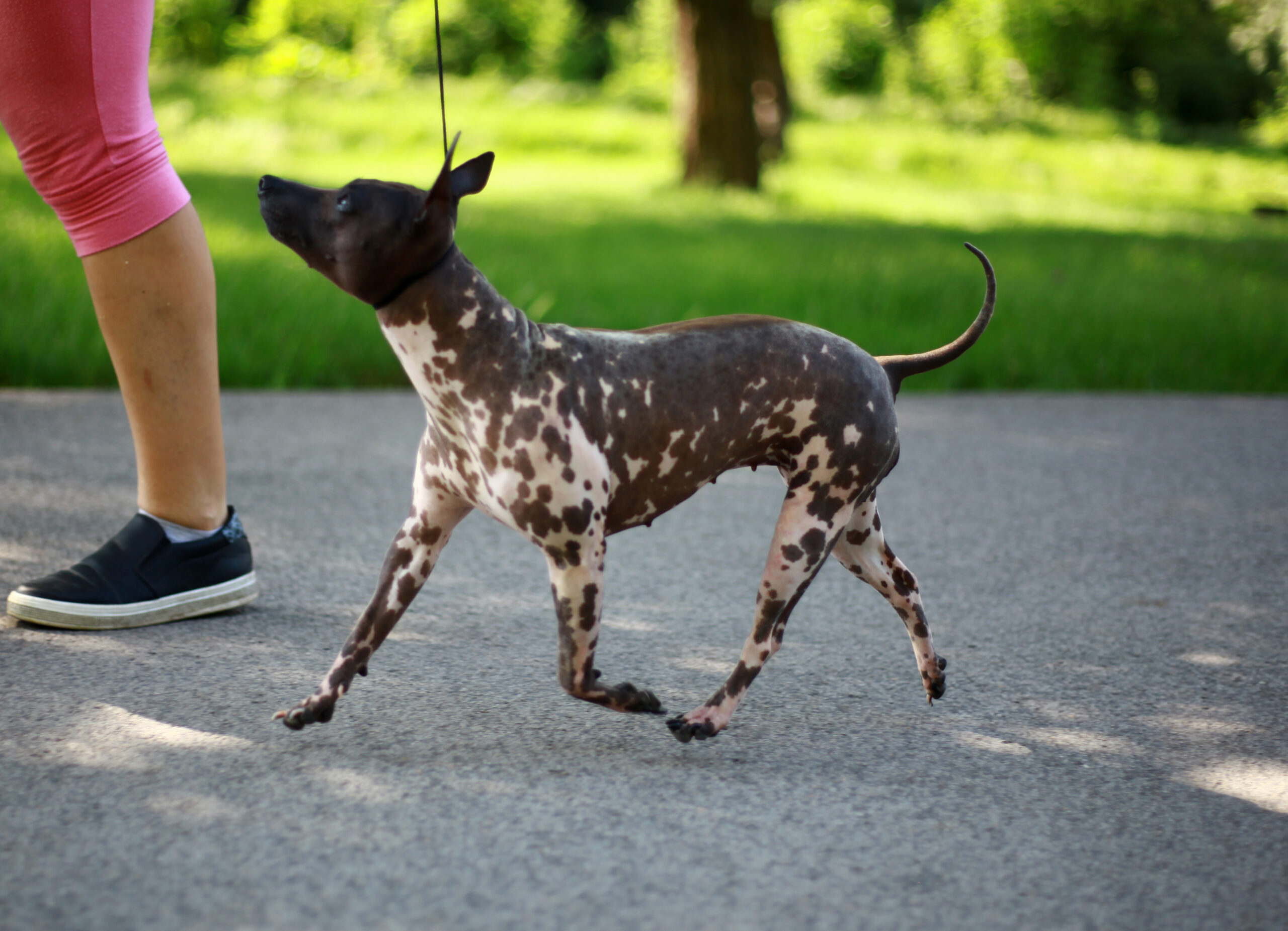
Tail: Set at the end of the croup, reaching nearly to the hocks. Thick at the base, tapering to a point. Carried upward in a slight curve when alert and horizontally or slightly arched upward when moving. The tail should never be docked in the hairless variety. Docking is optional in the coated variety.
Faults: Curved, ring, or curled tail.
Disqualification: Natural bobtail or docked tail in the hairless variety.
Forequarters
Shoulders: Well laid back, with upper tips of the shoulder blades close at the withers.
Forelegs: Straight and strong, viewed from any angle, with sturdy bone.
Pasterns: Strong, short, and nearly vertical.
Feet: Compact, slightly oval. The two middle toes are slightly longer than the others. Toes may be well-separated but not flat or open. Removal of dewclaws on forelegs is optional; rear dewclaws must be removed.
Faults: Flat feet, open feet, or rear dewclaws present.
Hindquarters
Thighs and Stifles: Muscular, with thighs and lower legs of approximately equal length. Angulation is balanced with the forequarters.
Hocks: Low-set.
Rear Pasterns: Short, strong, and perpendicular to the ground, parallel when viewed from behind.
Coat
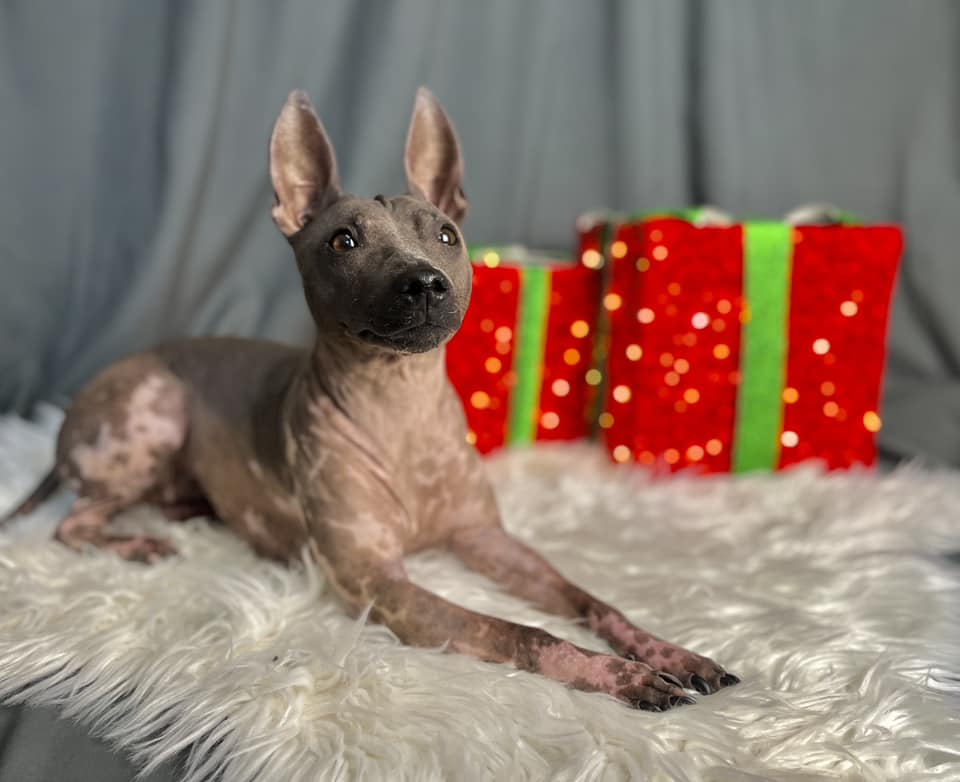
Hairless Variety: Puppies are born with a soft, downy coat called “birth coat,” which covers the body but falls out by 8–10 weeks of age, leaving them entirely hairless. Adults should be hairless except for whiskers and eyebrows, though they may have fine, short hairs on the body. The skin is smooth and warm to the touch.
Disqualification: Coarse, broken, or long coat in the coated variety.
Coated Variety: Covered with short, smooth, dense, shiny hair. Whiskers must not be removed.
Serious Fault: Incomplete or patchy coat coverage.
Color
Any color or combination of colors is acceptable except for albino or merle.
Disqualification: Merle or albinism.
Movement
Gait is effortless and regular, with good reach in the forequarters and drive in the hindquarters. The forelegs move without excessive lift, while the hindquarters provide powerful propulsion. The limbs converge toward the centerline as speed increases without crossing over. Movement is smooth, agile, and lively.
Temperament
Energetic, alert, curious, and intelligent. Aggression or extreme shyness should be penalized.